

The Insurrection Act
Why we should be concerned in 2025 about a law written in 1807.

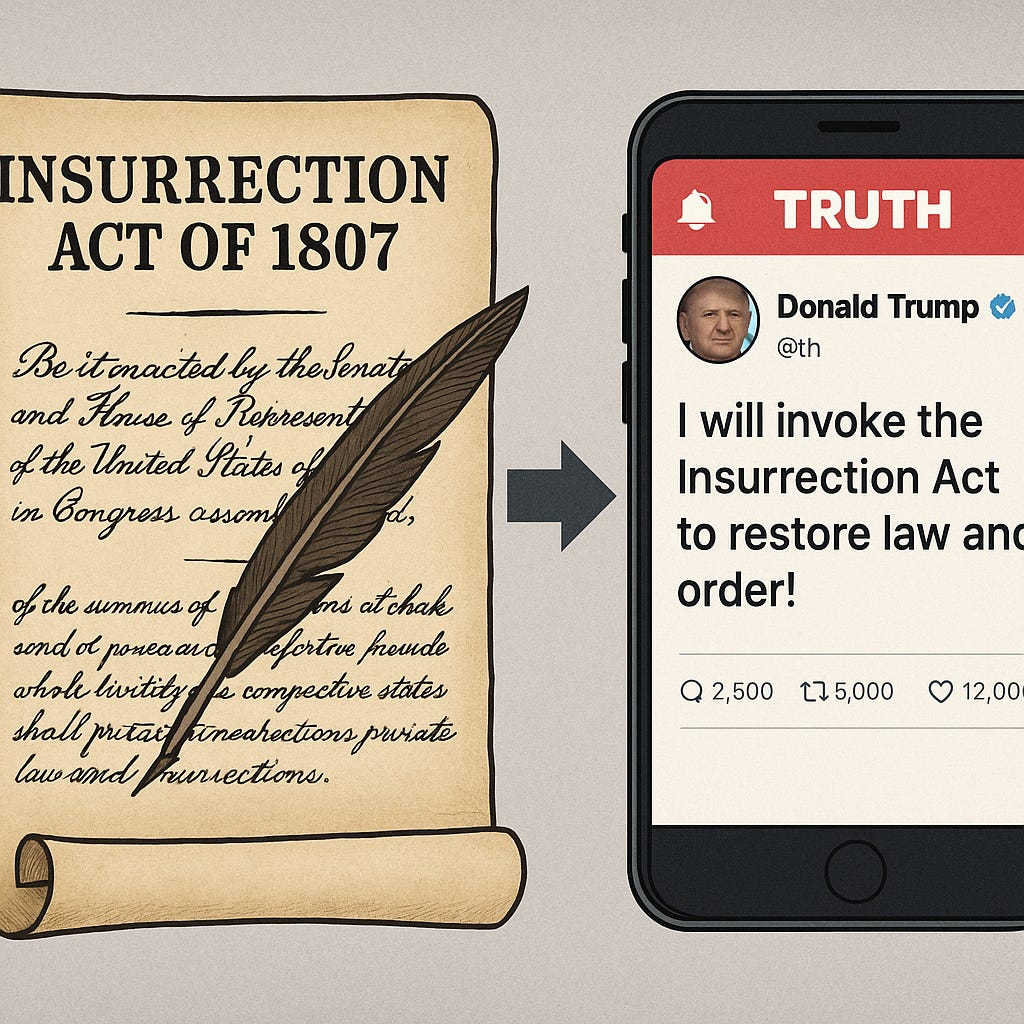
From Jefferson’s Quill to Trump’s Reels
The Insurrection Act of 1807 wasn’t written for cable news soundbites or political theater.
It was written by a country still shaking the dust of revolution off its boots — a legal backstop meant to keep the young republic from tearing itself apart.
In its earliest form, the Act allowed the president to call forth the militia to:
Suppress rebellions,
Enforce federal law,
Or protect citizens when state authorities refused or failed to act (Brennan Center).
It was born from the Calling Forth Acts of the 1790s and expanded under Thomas Jefferson in 1807 to include use of federal troops, not just state militias (History.com).
Over the centuries, Congress tinkered with it:
During Reconstruction,
The Civil Rights Movement,
And the Cold War
To define how and when presidents could use the military inside U.S. borders.
Yet, it remains one of the most ambiguous laws in the federal code:
Nowhere does it clearly define what counts as an “insurrection,”
“rebellion,”
or “domestic violence.”
The vagueness leaves the threshold almost entirely up to the president’s interpretation, with courts often catching up only after troops are already on the streets (NDU Press).
It’s been used sparingly:
To enforce desegregation in the South,
To protect civil rights marchers,
And during the 1992 Los Angeles riots after the Rodney King verdict.
Each time, the Act served as a reluctant emergency valve, invoked when the line between chaos and order blurred beyond civilian control.
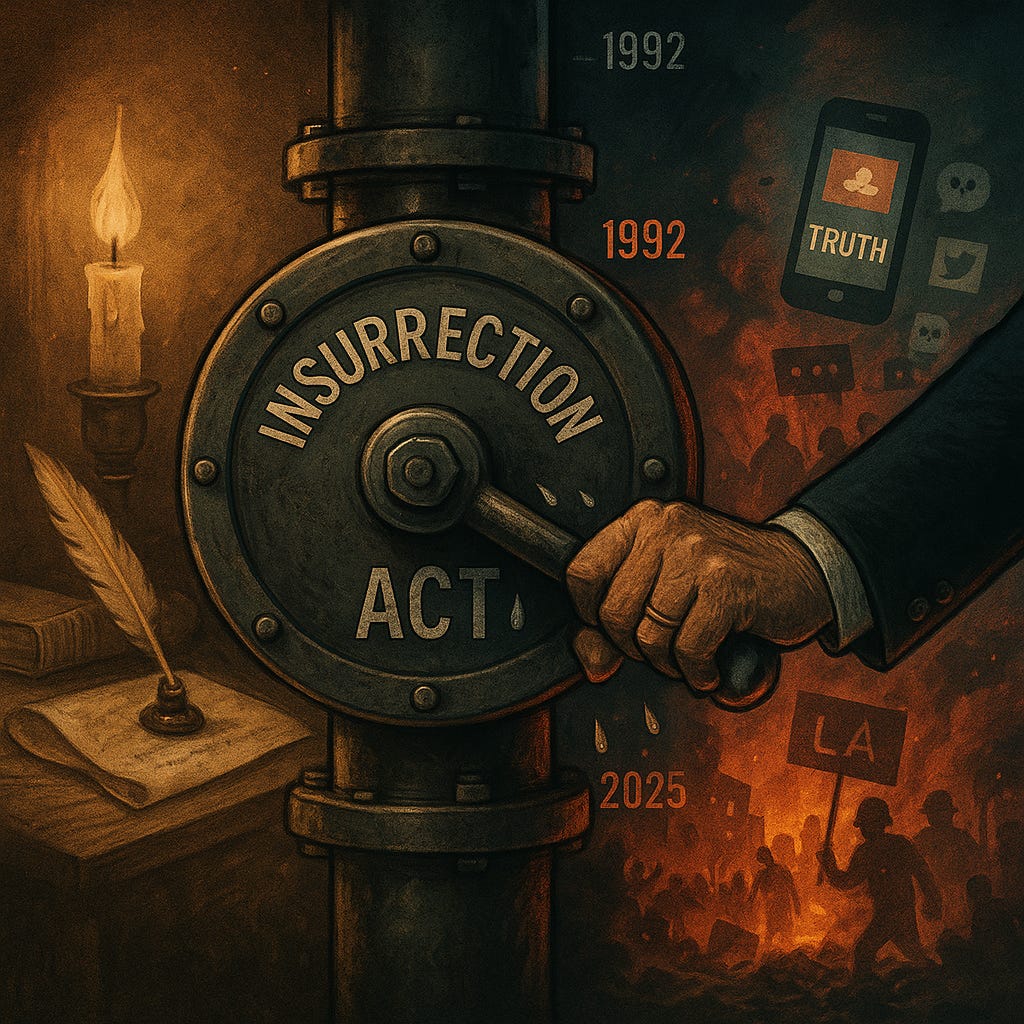
Flash forward to 2020.
The murder of George Floyd ignited a nationwide wave of protests and civil unrest.
Cities like Minneapolis, Saint Louis, Portland, Seattle and Washington, D.C. were engulfed in demonstrations demanding justice and police reform.
President Trump threatened to invoke the Insurrection Act on June 1, 2020, warning that if states didn’t “dominate the streets,” he would send in the military (ACS Law).
“If a city or a state refuses to take the actions that are necessary to defend the life and property of their residents, then I will deploy the United States military and quickly solve the problem for them,” Trump said from the Rose Garden.
But he never pulled the trigger.
Defense Secretary Mark Esper publicly opposed the idea, calling the Act a “last resort.”
General Mark Milley, then Chairman of the Joint Chiefs, echoed that sentiment, privately warning that using active-duty troops against American citizens could fracture military trust and invite constitutional crisis (Washington Post).
The Pentagon’s message was clear: don’t use the Army for politics.
Even as conservative media called for a show of force, the administration ultimately relied on National Guard deployments under state authority, not full federal occupation.
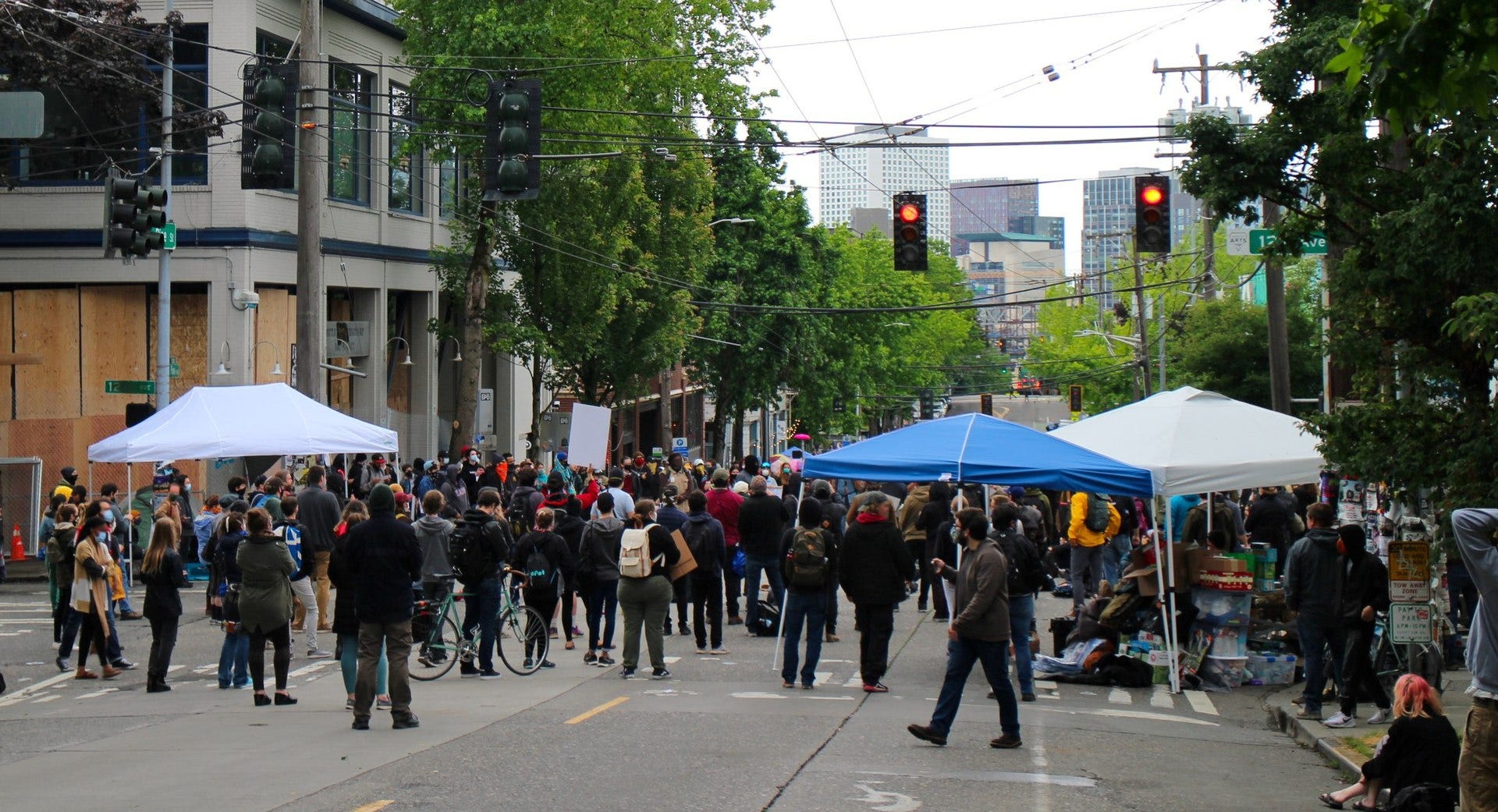
The same restraint played out during the CHOP/CHAZ protests in Seattle, where demonstrators briefly created a police-free zone in Capitol Hill.
Despite Fox News graphics calling it an “anarchist takeover,” the city and state handled the situation themselves- I know, my unit, and my troops were the people called up for this specific event.
The autonomous zone fizzled out without the military firing a shot (HistoryLink).
Ironically, Trump now says not using the Insurrection Act in 2020 was a mistake — and he’s promising not to hesitate “next time” (Washington Post).
![Area occupied by CHOP[2]](https://substackcdn.com/image/fetch/$s_!6mAX!,f_auto,q_auto:good,fl_progressive:steep/https%3A%2F%2Fsubstack-post-media.s3.amazonaws.com%2Fpublic%2Fimages%2F4a564f1c-42fb-4b9c-8308-9420f24fb081_1024x1024.jpeg "Area occupied by CHOP[2]")
2025: “Next Time” is Here.
Five years later, the threat is no longer hypothetical.
Trump and his adviser (an outspoken white nationalist) Stephen Miller are again invoking the word “insurrection” — but this time to describe judges and protesters, not mobs storming the Capitol.
In recent briefings, Miller referred to a judge’s order blocking the deployment of National Guard troops to Portland as a “legal insurrection.” The court had ruled that sending troops over local objections exceeded federal authority (CNN via Yahoo).
“There is an effort to delegitimize the core function of the federal government,” Miller said, claiming that judges were obstructing Trump’s duty to “enforce our immigration laws and our sovereignty.”
Trump, meanwhile, has begun hinting at invoking the Insurrection Act to override both local leaders and the judiciary — relying on outdated 2020 video reels from Portland’s Black Lives Matter protests to paint the city as an active war zone.
Those clips — tear gas, burning dumpsters, flashbangs — are being recycled by sympathetic outlets to suggest chaos that no longer exists.
When told directly by the mayor of Portland that the city was calm and operating normally, Trump reportedly responded:
“Then what I’m seeing on TV isn’t real?!”
That single line says everything. Trump isn’t reacting to conditions on the ground; he’s reacting to the reruns — propaganda loops he’s internalized as live feeds.
This isn’t situational awareness.
He’s being fed bad intel to craft his responses…
It’s time travel.
A president governing from the past, convinced that the smoke he sees on television is still burning in real life.

When Rhetoric Turns Deadly
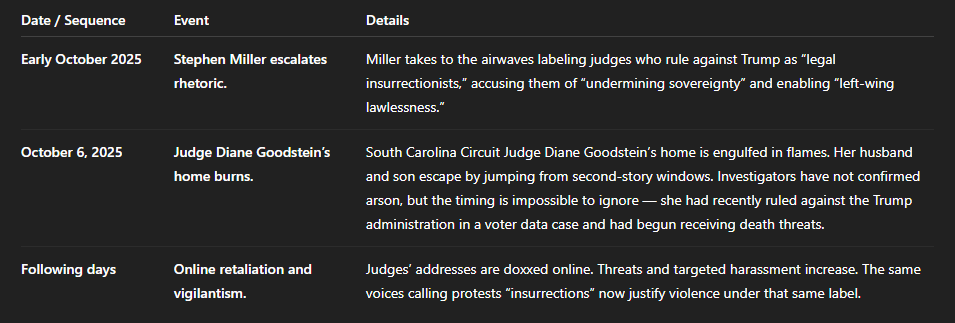
The Danger Isn’t Abstract.
I’ve said it repeatedly — just brushing it off as “oh, it’s just Trump” doesn’t excuse his incessant, ignorant rhetoric.
The outward face and words of a President matter.
Excusing the vileness that comes sputtering from his cake hole does nothing but stoke fires.
Every insult,
every smear,
every baseless accusation becomes kindling
— and eventually, someone lights the match.
I liken this to the military: if my Commander stood in front of my Airmen and told them our mission was a joke — a dog-and-pony show with no consequences — some of them would believe it.
If the boss doesn’t believe in the mission, why should they?
The mission would fail, and rightly so, because only a few Airmen would be left holding the bag.
That’s what’s happening now.
When a President spends years undermining the rule of law because it hasn’t personally benefited him, his followers take the cue.
They see his grievances as their own, his vendettas as moral crusades.
Whether they’re billionaires or broke, they see themselves reflected in his complaints — and they act accordingly.
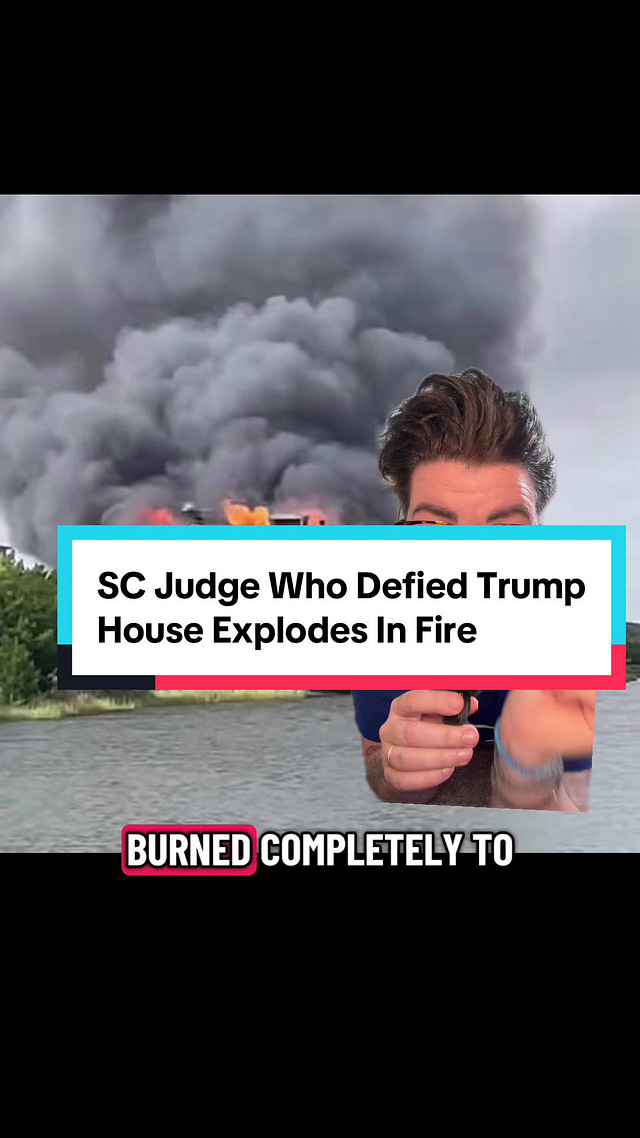
When the state’s loudest voices brand judicial independence as rebellion, someone always takes it literally.
 Tiktok failed to load.
Enable 3rd party cookies or use another browser
From Emergency Valve to Political Weapon
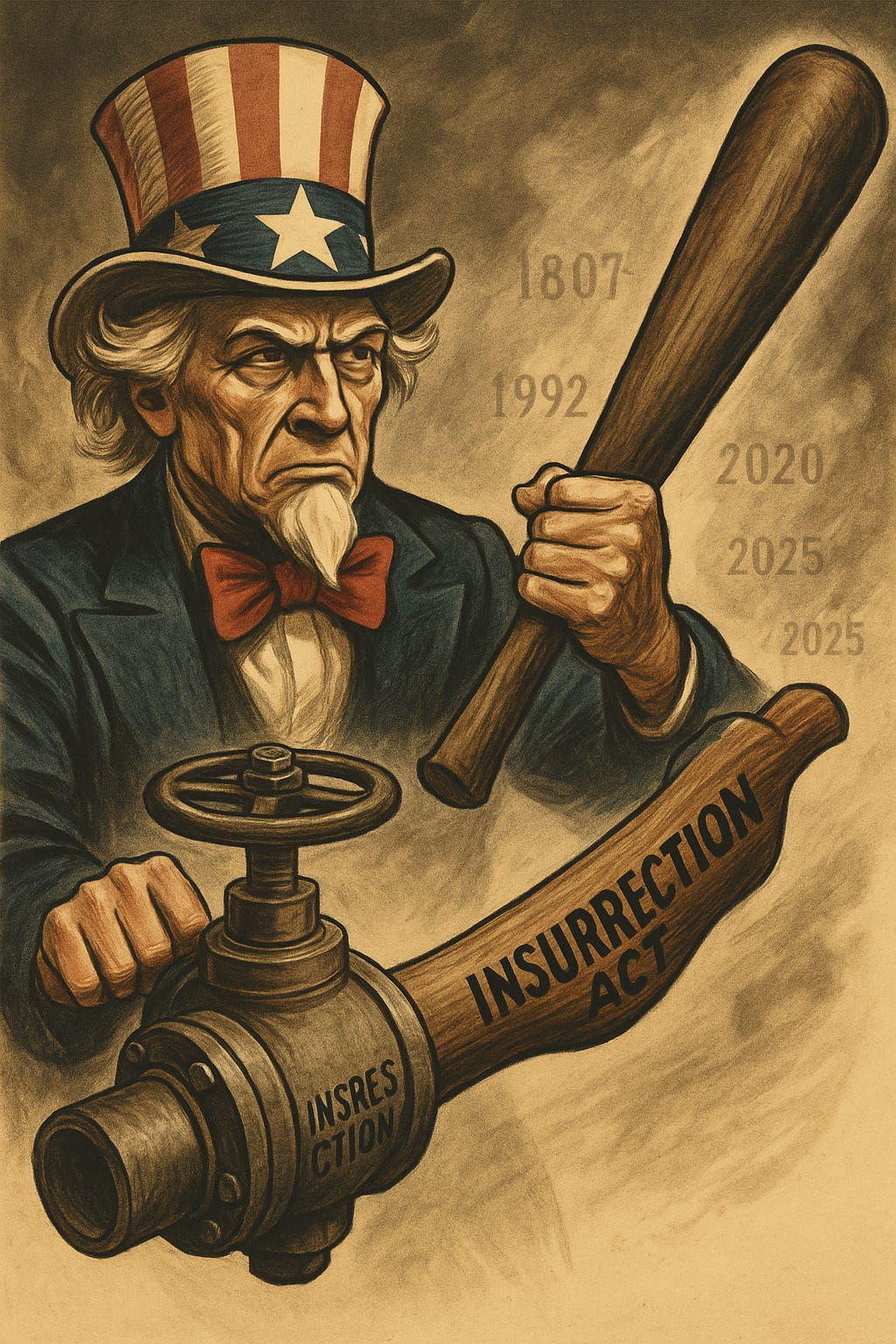
The Insurrection Act was meant as a safety release — a last resort when civil society buckles.
Jefferson’s hand turned that valve to prevent the Republic from boiling over.
But in the hands of men like Trump and Miller, that valve isn’t safety — it’s leverage, it’s a cudgel.
The label of “insurrection” has become political fuel:
used to silence protestors,
delegitimize judges,
and justify military power under the illusion of “order.”
If 1807 gave presidents an emergency valve, 2025’s leaders are learning how to keep their hands on it — permanently.
Bibliography
Brennan Center for Justice — The Insurrection Act Explained
History.com — Thomas Jefferson and the Insurrection Act
NDU Press — Calling Forth the Military: A Brief History of the Insurrection Act
American Constitution Society — The President’s Legal Authority to Commit Troops Domestically Under the Insurrection Act
The Washington Post — Military leaders resisted Trump’s push to invoke the Insurrection Act in 2020
HistoryLink — The Capitol Hill Organized Protest (CHOP)
The Washington Post — Trump’s promise to use the Insurrection Act “next time”
CNN via Yahoo News — Trump and Miller float the Insurrection Act over anti-ICE protests
TIME — House of South Carolina Judge Criticized by Trump Administration Set Ablaze
The Guardian — Fire engulfs home of South Carolina judge who had received death threats
New York Post — Stephen Miller calls judges who rule against Trump “legal insurrectionists”